How do better-fit customers and communities create sustainable growth?
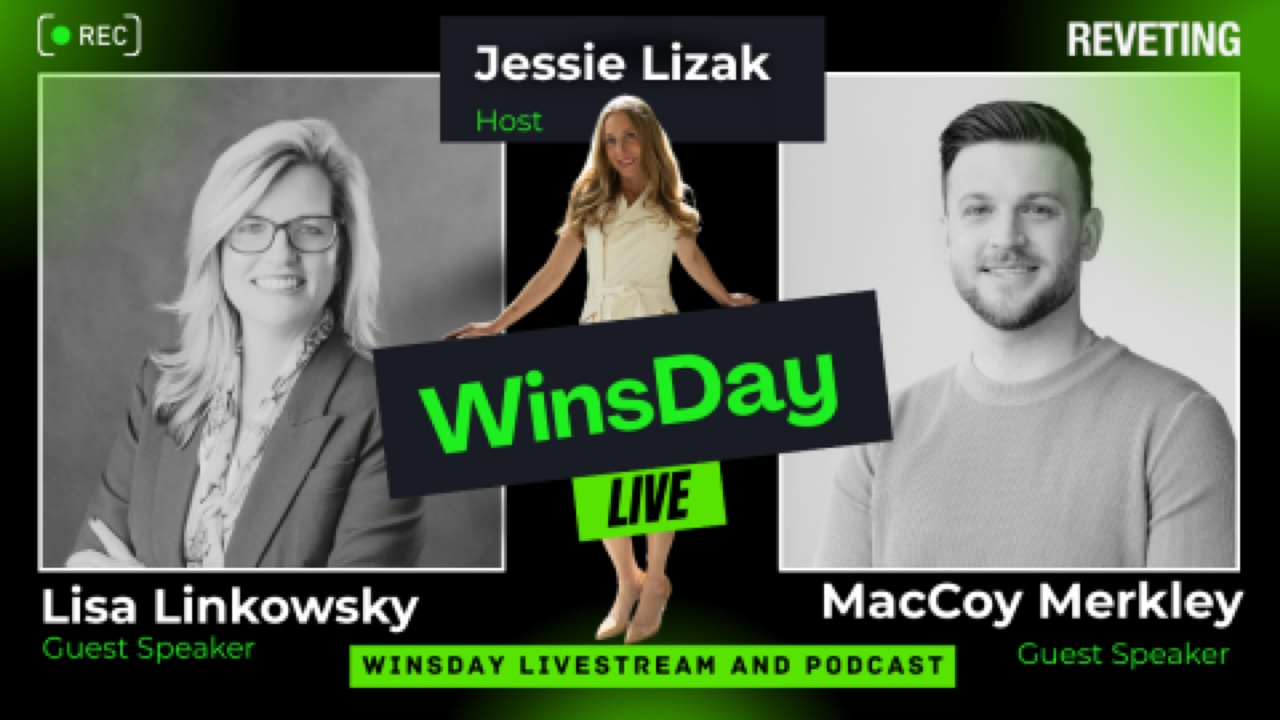
This WinsDay, a Reveting B2B Podcast, episode features Lisa Linkowsky, certified franchise advisor at Milestone Franchising, and MacCoy Merkley, chief marketing officer at Portland Leather Goods. With host Jessie Lizak, they explain how businesses can use AI without losing human judgment, protect the quality of referrals by saying no to a poor fit, build customer and creator communities with a clear purpose, and give TikTok and Meta distinct jobs in a growth strategy.
Sustainable growth comes from choosing the right relationships and channels, not simply maximizing reach. Lisa shows why responsible advising sometimes means turning an opportunity away before it harms the buyer or the business. MacCoy separates customer communities, affiliates, and influencers, then connects TikTok's strength in earning attention to Meta's ability to move interested buyers toward purchase. The practical lesson is to define the customer, community, and outcome first, then use technology and distribution to support that fit.
- Reaching Your Next Client With AI | Lisa Linkowsky
- Saying No to Build Better Referrals | Lisa Linkowsky
- Creator Communities That Help Brands Grow | MacCoy Merkley
- Choosing Between Meta and TikTok | MacCoy Merkley
What the guests said
These are direct excerpts from the episode transcript. Punctuation, capitalization, filler repetitions, and obvious transcription artifacts were lightly cleaned for readability.
“I push more people away from this than I help get into this. Everyone should not go to college. Everyone should not buy a house, and everyone should not get into a business for themselves. And I am very adamant about that. Business ownership is extremely difficult, and not everyone can do it. Not everyone is cut out for it.”
“We owe a lot of our success and how we've grown as a business to that community, a place where your best customers can go and host conversations with the brand popping in from time to time, not being an iron fist and ruling over it. But that has been fundamental to our growth.”
Official episode notes
In this episode of the Winsday Podcast, host Jessie Lizak sits down with Lisa Linkowsky, Certified Franchise Advisor at Milestone Franchising, and MacCoy Merkley, Chief Marketing Officer at Portland Leather Goods, to explore how businesses can find better customers, build stronger relationships, and grow through strategic marketing. Drawing from their experience in franchise advising, digital marketing, e-commerce, and brand development, Lisa and MacCoy share insights on using AI to reach potential clients, building referral networks, leveraging creator communities, and making smarter advertising decisions.
The conversation explores how businesses can use AI to personalize outreach and reach their next customers without losing the human connection that builds trust. Lisa explains why knowing when to say no can lead to better referrals and stronger business relationships, while MacCoy shares how creator communities and affiliate marketing have helped Portland Leather Goods accelerate growth. They also break down the differences between Meta and TikTok, explaining how businesses can use TikTok to capture attention and Meta to move potential customers toward a purchase. Whether you're a business owner, marketer, entrepreneur, or sales professional, this episode offers practical insights into finding the right customers and building sustainable growth through relationships and strategic marketing.
Main Topics Covered
- Reaching Your Next Client With AI | Lisa Linkowsky
- Saying No to Build Better Referrals | Lisa Linkowsky
- Creator Communities That Help Brands Grow | MacCoy Merkley
- Choosing Between Meta and TikTok | MacCoy Merkley
Connect with Lisa Linkowsky
- Website: https://www.milestonefranchising.com
- LinkedIn: https://www.linkedin.com/in/lisalinkowsky/
- Milestone Franchising LinkedIn: https://www.linkedin.com/company/milestone-franchising/home/
Connect with MacCoy Merkley
- Website: https://www.portlandleathergoods.com
- LinkedIn: https://www.linkedin.com/in/maccoy-merkley-95146815b/
- Portland Leather Goods LinkedIn: https://www.linkedin.com/company/portland-leather-goods/home/
Follow Reveting to stay updated on upcoming episodes
- Website: https://www.reveting.com/
- LinkedIn: https://www.linkedin.com/company/whiskey-winsday/
- YouTube: https://www.youtube.com/@whiskeywinsday
Connect with Jessie Lizak
How does one episode become a podcast and short-form video library?
The recording is only the starting point. A single WinsDay-style conversation can become a podcast episode, a full YouTube video, several short-form clips, written show notes, quote-led social posts, an email, and internal sales material. The strongest repurposing does not cut random moments simply because they are short. It identifies complete ideas that answer a buyer question, challenge an assumption, or offer a practical next step.
This approach gives a team more value from the time already spent recording. It also creates repetition without duplication: the same core expertise can appear as audio for podcast listeners, video for YouTube viewers, concise clips for social feeds, and written context for people searching on Google or asking an AI tool. Each format supports a different discovery habit while reinforcing the same positioning.
What should brands publish on LinkedIn and YouTube after the show?
LinkedIn and YouTube serve different roles in an expert-led content system. LinkedIn is useful for timely ideas, direct conversation, professional relationships, and distribution through the people attached to a brand. YouTube gives long-form video and searchable clips a longer shelf life. A practical publishing plan uses both: LinkedIn to create dialogue around the episode and YouTube to build a structured library of topics that buyers can discover later.
Instead of posting the same caption everywhere, teams should package the episode around the intent of each platform. A LinkedIn post can frame a strong point of view and invite informed discussion. A YouTube title and description should state the problem, audience, and outcome in plain language. Short clips need an immediate premise, readable captions, and enough context to stand alone. Consistent publishing matters, but clarity matters more.
How does episode content improve SEO and AI-search visibility?
Search visibility now includes traditional results and answers assembled by large language models. Both systems benefit from content that names the subject clearly, explains relationships between ideas, identifies the people and organizations involved, and provides complete answers in accessible language. Detailed episode pages can support that work when they include an accurate title, publication date, descriptive headings, original show notes, podcast metadata, internal links, and structured data.
The goal is not to repeat keywords unnaturally. It is to make the page genuinely useful for someone researching Reaching Your Next Client With AI | Lisa Linkowsky, Saying No to Build Better Referrals | Lisa Linkowsky, or a production partner who can help turn expertise into content. Specific examples, well-labeled sections, consistent entity information, and source links give search systems more context. They also help human readers decide whether the conversation and Reveting’s services are relevant to their needs.