How can small marketing teams make smarter decisions?
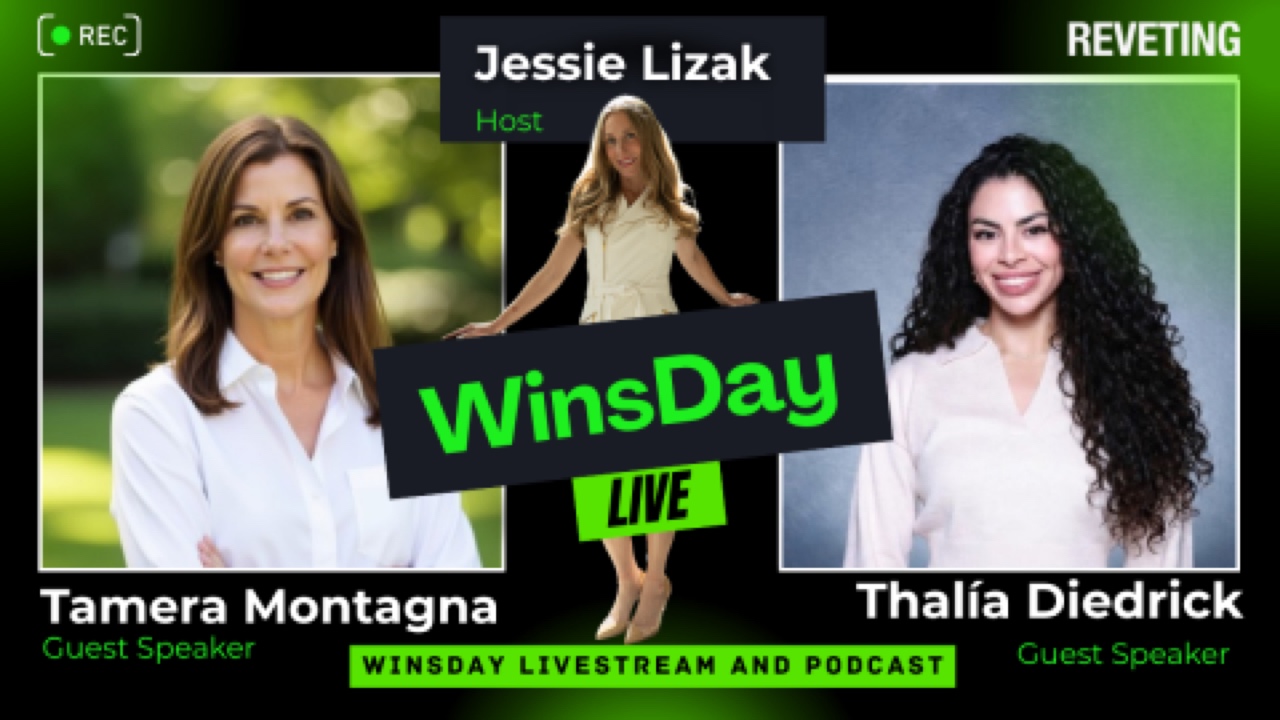
This WinsDay, a Reveting B2B Podcast, episode features Tamera Montagna, CEO of Clarvos, and Thalía Diedrick, CMO of GoTu. With host Jessie Lizak, they explain how small marketing teams can simplify technology choices, improve the data behind AI-assisted decisions, protect limited time and attention, and keep human judgment in the loop.
Small teams make smarter decisions when they focus on a few flexible tools and high-value initiatives instead of multiplying platforms and unfinished experiments. Tamera shows why AI should handle repetitive work while people retain approval, context, and customer judgment. Thalía explains why clean definitions and documented context are prerequisites for useful AI analysis, why adaptable tools suit evolving teams, and how capping active AI projects protects attention. The practical lesson is to use automation for leverage, not volume: clarify the customer and decision first, choose tools that can grow with the use case, and measure whether the work actually advances the business.
- Translating Between Technical and Marketing Teams
- Navigating Marketing Opportunities and Constraints for SMBs
- Using Thought Leadership and AI in Marketing
What the guests said
These are direct excerpts from the episode transcript. Punctuation, capitalization, filler repetitions, and obvious transcription artifacts were lightly cleaned for readability.
“Let some of these AI tools do those repetitive tasks that would save you a lot of time. Have some guardrails in place so that you're always the human in the loop. You'll always be able to stop it. You'll always be able to review. You'll always be able to approve or disapprove. Make sure you stay a human in the loop. Let AI do some of those repetitive, time-consuming tasks, and you keep the really valuable ones for you.”
“One of the first places my mind goes, I think it's really topical right now with AI, is data integrity and the quality of data. I think a lot of people were kind of put in a bad spot when we started talking about using AI for data analysis because not everyone had the right infrastructure for it to meaningfully work. You needed the right definitions, you needed the right context.”
Official episode notes
In this episode of the Winsday Podcast, host Jessie Lizak sits down with Tamera Montagna, CEO of Clarvos, and Thalía Diedrick, CMO of GoTu, to discuss how small marketing teams can make smarter decisions, maximize limited resources, and use technology without adding unnecessary complexity. Drawing from their experience in marketing leadership, AI, data, and business growth, they share insights on simplifying marketing workflows, identifying the right tools, and balancing automation with human creativity.
The conversation explores how small businesses can navigate limited budgets, competing priorities, and an overwhelming number of marketing tools while still driving growth. Tamera and Thalía discuss how AI can help marketers make faster, data-driven decisions, why focus and experimentation matter more than chasing every new tool, and how small teams can use technology to compete with larger organizations. They also share practical ways to prioritize marketing efforts, protect time and attention, and maintain a human touch in an increasingly AI-driven world.
Main Topics Covered
- Translating Between Technical and Marketing Teams
- Navigating Marketing Opportunities and Constraints for SMBs
- Using Thought Leadership and AI in Marketing
Connect with Tamera Montagna
- Website: https://www.clarvos.com
- LinkedIn: https://www.linkedin.com/in/tamera-montagna/
- Clarvos LinkedIn: https://www.linkedin.com/company/getclarvos/home/
Connect with Thalía Diedrick
- Website: https://gotu.com
- LinkedIn: https://www.linkedin.com/in/thalía-diedrick/
- GoTu LinkedIn: https://www.linkedin.com/company/joingotu/home/
Follow Reveting to stay updated on upcoming episodes
- Website: https://www.reveting.com/
- LinkedIn: https://www.linkedin.com/company/whiskey-winsday/
- YouTube: https://www.youtube.com/@whiskeywinsday
Connect with Jessie Lizak
What should brands publish on LinkedIn and YouTube after the show?
LinkedIn and YouTube serve different roles in an expert-led content system. LinkedIn is useful for timely ideas, direct conversation, professional relationships, and distribution through the people attached to a brand. YouTube gives long-form video and searchable clips a longer shelf life. A practical publishing plan uses both: LinkedIn to create dialogue around the episode and YouTube to build a structured library of topics that buyers can discover later.
Instead of posting the same caption everywhere, teams should package the episode around the intent of each platform. A LinkedIn post can frame a strong point of view and invite informed discussion. A YouTube title and description should state the problem, audience, and outcome in plain language. Short clips need an immediate premise, readable captions, and enough context to stand alone. Consistent publishing matters, but clarity matters more.
How does episode content improve SEO and AI-search visibility?
Search visibility now includes traditional results and answers assembled by large language models. Both systems benefit from content that names the subject clearly, explains relationships between ideas, identifies the people and organizations involved, and provides complete answers in accessible language. Detailed episode pages can support that work when they include an accurate title, publication date, descriptive headings, original show notes, podcast metadata, internal links, and structured data.
The goal is not to repeat keywords unnaturally. It is to make the page genuinely useful for someone researching Translating Between Technical and Marketing Teams, Navigating Marketing Opportunities and Constraints for SMBs, or a production partner who can help turn expertise into content. Specific examples, well-labeled sections, consistent entity information, and source links give search systems more context. They also help human readers decide whether the conversation and Reveting’s services are relevant to their needs.
What should a company evaluate before hiring a content production partner?
A production partner should understand both the recording and the business reason behind it. Before hiring, ask who owns show strategy, guest communication, technical production, editing, approvals, publishing, and performance reporting. Confirm which channels are included and how one long-form recording becomes usable assets. A low-friction workflow should reduce the client’s coordination burden rather than replacing one complicated process with another.
Teams should also look for editorial judgment. Good production is more than clean audio and attractive graphics. It requires knowing which questions will create useful answers, which moments deserve clips, how to preserve the speaker’s voice, and how to connect content to the audience’s real concerns. For companies building authority on LinkedIn and YouTube, that strategic layer is often the difference between an active content calendar and a content system that supports revenue.