What does “Product-Market Fit, Personal Brands, and Offers That Convert” mean for a growing B2B brand?
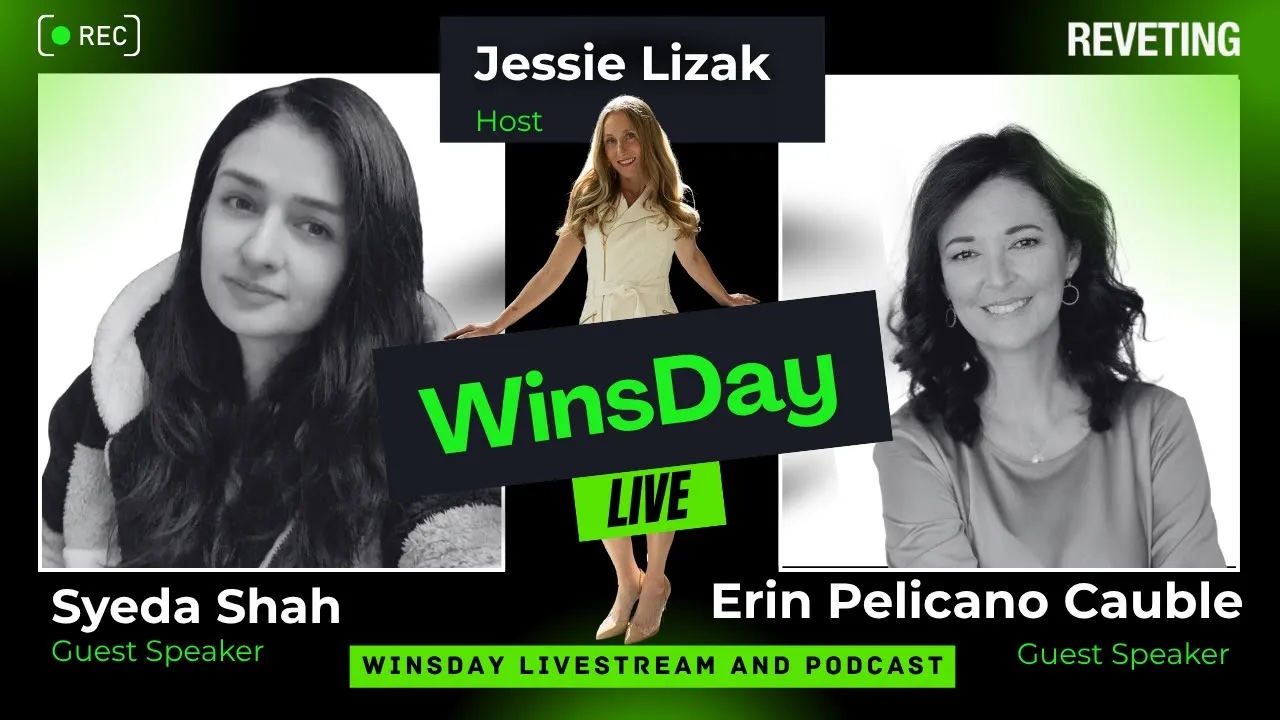
In this episode of the Winsday Podcast, host Jessie Lizak sits down with Syeda Shah, Founder of Self Canada, and Erin Pelicano Cauble, Founder & Advisor of The Venture Project LLC, to discuss what it really takes to build a business that can scale sustainably. Drawing from their experiences as founders and advisors, Syeda and Erin share practical lessons on validating ideas, building trust with potential customers, and creating offers that align with both market demand and founder expertise.
The conversation explores why finding product-market fit should come before aggressive growth, how LinkedIn has become a powerful platform for validating demand and establishing credibility, and why the best offers are often refined through customer feedback rather than assumptions. Syeda and Erin also explain the importance of letting go of products and services that aren't profitable, allowing founders to focus on opportunities that create lasting business growth. Whether you're launching your first business or refining an existing one, this episode is filled with actionable insights for building a stronger, more sustainable company.
- Finding Product-Market Fit Before You Scale
- Using LinkedIn™ to Validate Demand and Build Trust
- Refining Offers Around Customer Demand and Founder Strengths
- Letting Go of Offers That Don't Drive Profit
What the guests said
These are direct excerpts from the episode transcript. Punctuation, capitalization, filler repetitions, and obvious transcription artifacts were lightly cleaned for readability.
“You have to actually niche down to a specific, really specific group of people, which are your ideal customer persona or ideal customer profile. And then you have to make sure that you stick on that because it's very easy to get distracted by everything coming here and there, thinking that, okay, that looks more accessible or that's a bigger gap.”
“You need to figure out what makes you unique. So what is your unique value proposition that you're offering these clients? And it comes from a place of really the intersection, I should say, the intersection of what you want to offer, what you're really good at offering—again, it could be a service, it could be a product—and then lastly, what do people actually want to spend their money on?”
Official episode notes
In this episode of the Winsday Podcast, host Jessie Lizak sits down with Syeda Shah, Founder of Self Canada, and Erin Pelicano Cauble, Founder & Advisor of The Venture Project LLC, to discuss what it really takes to build a business that can scale sustainably. Drawing from their experiences as founders and advisors, Syeda and Erin share practical lessons on validating ideas, building trust with potential customers, and creating offers that align with both market demand and founder expertise.
The conversation explores why finding product-market fit should come before aggressive growth, how LinkedIn has become a powerful platform for validating demand and establishing credibility, and why the best offers are often refined through customer feedback rather than assumptions. Syeda and Erin also explain the importance of letting go of products and services that aren't profitable, allowing founders to focus on opportunities that create lasting business growth. Whether you're launching your first business or refining an existing one, this episode is filled with actionable insights for building a stronger, more sustainable company.
Main Topics Covered
Finding Product-Market Fit Before You Scale
Using LinkedIn™ to Validate Demand and Build Trust
Refining Offers Around Customer Demand and Founder Strengths
Letting Go of Offers That Don't Drive Profit
Connect with Syeda Shah
Website: https://selfcanada.co
LinkedIn: https://www.linkedin.com/in/syeda-s-52213a211/
Self Canada LinkedIn: https://www.linkedin.com/company/self-canada/
Connect with Erin Pelicano Cauble
Website: https://www.theventurepro.com
LinkedIn: https://www.linkedin.com/in/erinpelicano/
The Venture Project LLC LinkedIn: https://www.linkedin.com/company/the-venture-project-usa/
Follow Reveting to stay updated on upcoming episodes
Website: https://www.reveting.com/
LinkedIn: https://www.linkedin.com/company/whiskey-winsday/
YouTube: https://www.youtube.com/@whiskeywinsday
Connect with Jessie Lizak
What should a company evaluate before hiring a content production partner?
A production partner should understand both the recording and the business reason behind it. Before hiring, ask who owns show strategy, guest communication, technical production, editing, approvals, publishing, and performance reporting. Confirm which channels are included and how one long-form recording becomes usable assets. A low-friction workflow should reduce the client’s coordination burden rather than replacing one complicated process with another.
Teams should also look for editorial judgment. Good production is more than clean audio and attractive graphics. It requires knowing which questions will create useful answers, which moments deserve clips, how to preserve the speaker’s voice, and how to connect content to the audience’s real concerns. For companies building authority on LinkedIn and YouTube, that strategic layer is often the difference between an active content calendar and a content system that supports revenue.
A practical next-step checklist
Use this episode as a working session for your own brand. Start with the questions below, then choose one conversation you can record and distribute consistently rather than planning an oversized campaign that never launches.
- Define the audience and business question connected to Finding Product-Market Fit Before You Scale.
- Choose one host with credible experience and a clear point of view.
- Plan a livestream or recorded interview around four focused questions.
- Decide before recording which podcast, YouTube, short-form, and LinkedIn assets are required.
- Assign one owner for approvals, publishing, links, and performance review.
- Measure qualified conversations and content reuse—not impressions alone.
How can Reveting help?
Reveting helps expert-led B2B brands turn conversations into consistent, multi-channel content. The work can include livestream planning and production, podcast editing and publishing, short-form video, show notes, and social content for LinkedIn and YouTube. The objective is a repeatable system that captures the client’s real expertise without requiring the client to manage every production detail.
If this episode reflects a conversation your company should be leading, the next step is to map the show concept, audience, distribution channels, and repurposing plan before recording. That creates a stronger brief for the host, guests, production team, editors, and social team—and gives every finished asset a clear job to do.