What does “Turning Brand and Visibility Into Revenue Growth” mean for a growing B2B brand?
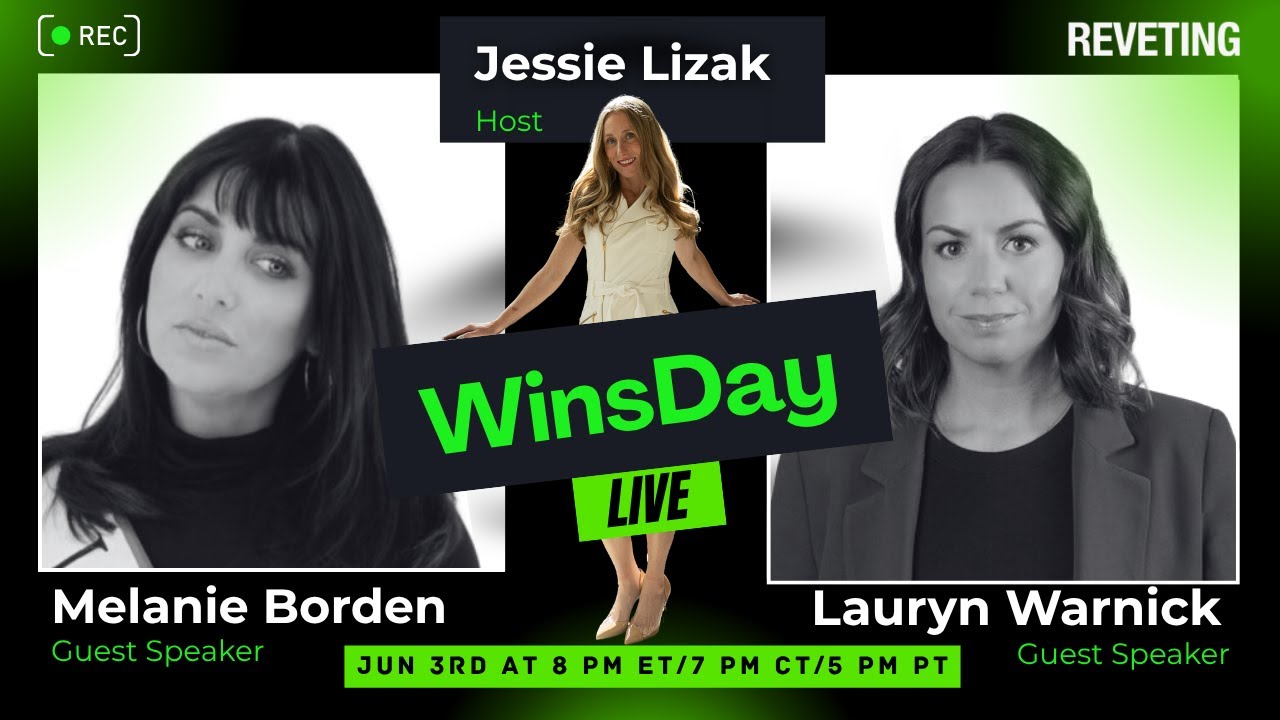
B2B growth is becoming harder to earn, not because companies lack good products, but because they struggle to be clearly understood, consistently visible, and easy to find.Buyers are no longer relying on one channel or one interaction. They are researching, validating, and forming opinions long before a conversation ever happens, which means brand, visibility, and leadership presence are now directly tied to revenue.On this episode of WinsDay, Jessie Lizak will go live with Melanie Borden, Founder of The Borden Group and author of Theatre of the Mind, and Lauryn Warnick, CEO & Founder of Villain Branding, to explore how modern B2B companies are turning brand and visibility into measurable business outcomes.Melanie brings a strong perspective on building searchable leadership and executive visibility in a world where both people and AI influence discovery.She shares how leaders can structure their expertise so it is not only seen, but understood and trusted across platforms.Lauryn focuses on the role of brand as a revenue driver, including how clearer positioning and stronger messaging can shorten sales cycles and remove friction from the buying process.She also believes in building a verbal-first brand system that keeps messaging clear, simple, and consistent no matter who is communicating or where it shows up.Topics:1. Searchable Leadership Strategy2. Using Brand to Shorten Sales Cycles3. Executive Visibility Strategy4. Building a Verbal-First Brand System for ConsistencyThis discussion connects brand, leadership, and messaging into one core idea: growth depends on whether your business and your leadership can be found, understood, and trusted at every stage of the buyer journey.For founders, executives, and B2B marketing leaders, this episode offers a practical look at how to build visibility systems, strengthen brand clarity, and turn both into consistent revenue growth.
What the guests said
These are direct excerpts from the episode transcript. Punctuation, capitalization, filler repetitions, and obvious transcription artifacts were lightly cleaned for readability.
“Searchable leadership is what people find when they look for you. You have that piece of it, right? Executive visibility is what causes them to look in the first place. And the most qualified person is most times rarely the most visible person.”
“Models, their job is to repeat what's consistent. When the entire role of it is to identify what's consistent, the consistency of what you say as a founder or a corporation is hugely crucial. If everyone is using AI to help with their personal or corporate positioning, then everyone's going to sound the same, because that's the entire point of AI. It's giving you the next most probable thing.”
Official episode notes
B2B growth is becoming harder to earn, not because companies lack good products, but because they struggle to be clearly understood, consistently visible, and easy to find.Buyers are no longer relying on one channel or one interaction. They are researching, validating, and forming opinions long before a conversation ever happens, which means brand, visibility, and leadership presence are now directly tied to revenue.On this episode of WinsDay, Jessie Lizak will go live with Melanie Borden, Founder of The Borden Group and author of Theatre of the Mind, and Lauryn Warnick, CEO & Founder of Villain Branding, to explore how modern B2B companies are turning brand and visibility into measurable business outcomes.Melanie brings a strong perspective on building searchable leadership and executive visibility in a world where both people and AI influence discovery.She shares how leaders can structure their expertise so it is not only seen, but understood and trusted across platforms.Lauryn focuses on the role of brand as a revenue driver, including how clearer positioning and stronger messaging can shorten sales cycles and remove friction from the buying process.She also believes in building a verbal-first brand system that keeps messaging clear, simple, and consistent no matter who is communicating or where it shows up.Topics:1. Searchable Leadership Strategy2. Using Brand to Shorten Sales Cycles3. Executive Visibility Strategy4. Building a Verbal-First Brand System for ConsistencyThis discussion connects brand, leadership, and messaging into one core idea: growth depends on whether your business and your leadership can be found, understood, and trusted at every stage of the buyer journey.For founders, executives, and B2B marketing leaders, this episode offers a practical look at how to build visibility systems, strengthen brand clarity, and turn both into consistent revenue growth.
What should brands publish on LinkedIn and YouTube after the show?
LinkedIn and YouTube serve different roles in an expert-led content system. LinkedIn is useful for timely ideas, direct conversation, professional relationships, and distribution through the people attached to a brand. YouTube gives long-form video and searchable clips a longer shelf life. A practical publishing plan uses both: LinkedIn to create dialogue around the episode and YouTube to build a structured library of topics that buyers can discover later.
Instead of posting the same caption everywhere, teams should package the episode around the intent of each platform. A LinkedIn post can frame a strong point of view and invite informed discussion. A YouTube title and description should state the problem, audience, and outcome in plain language. Short clips need an immediate premise, readable captions, and enough context to stand alone. Consistent publishing matters, but clarity matters more.
How does episode content improve SEO and AI-search visibility?
Search visibility now includes traditional results and answers assembled by large language models. Both systems benefit from content that names the subject clearly, explains relationships between ideas, identifies the people and organizations involved, and provides complete answers in accessible language. Detailed episode pages can support that work when they include an accurate title, publication date, descriptive headings, original show notes, podcast metadata, internal links, and structured data.
The goal is not to repeat keywords unnaturally. It is to make the page genuinely useful for someone researching Turning Brand and Visibility Into Revenue Growth, building trust with the right audience, or a production partner who can help turn expertise into content. Specific examples, well-labeled sections, consistent entity information, and source links give search systems more context. They also help human readers decide whether the conversation and Reveting’s services are relevant to their needs.