What does “Organic Growth and Emotional Marketing: The Future of Sales” mean for a growing B2B brand?
Funnels are out. Feeling is in.
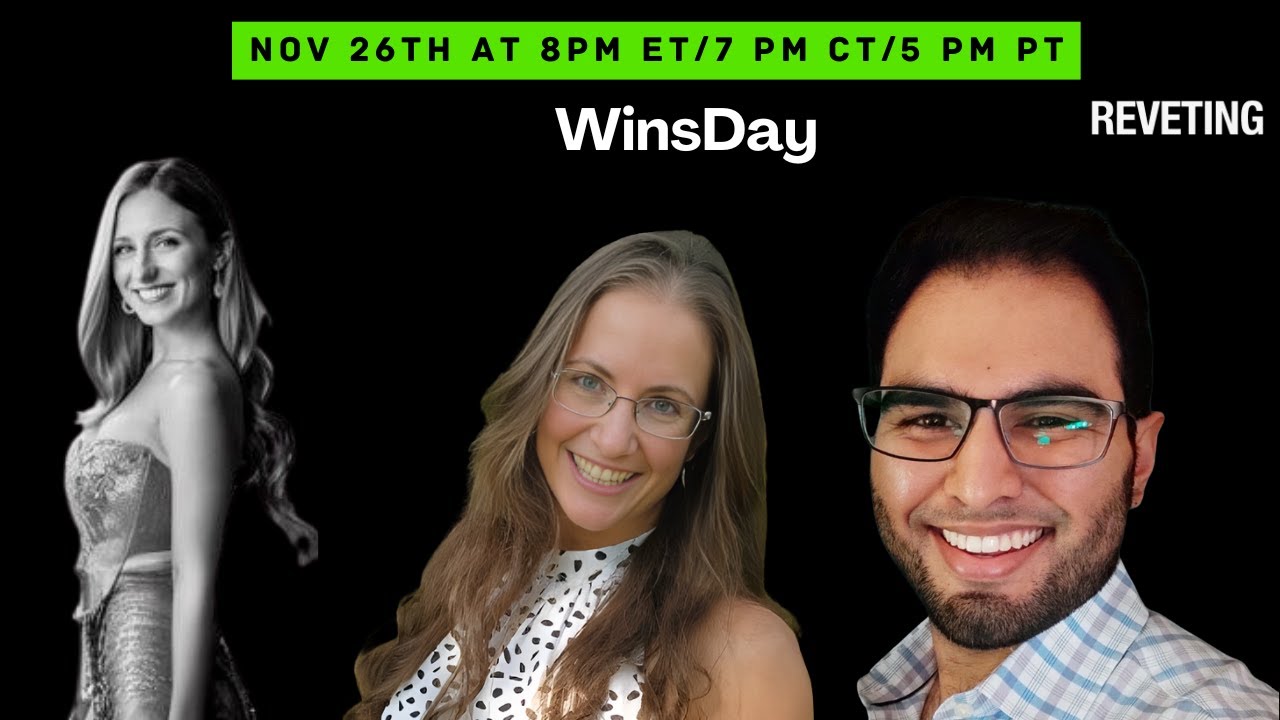
This WinsDay, we’re diving into how emotion, authenticity, and creativity are redefining modern marketing and sales.
What the guests said
These are direct excerpts from the episode transcript. Punctuation, capitalization, filler repetitions, and obvious transcription artifacts were lightly cleaned for readability.
“Oh, 100% agree on all that. Exactly. So many people, especially of faith, they're like, if I believe in God, oh, I I'm not supposed to be like earning a lot of money. I'm not supposed to be so successful.”
Official episode notes
Funnels are out. Feeling is in.
This WinsDay, we’re diving into how emotion, authenticity, and creativity are redefining modern marketing and sales.
Joining Jessie Lizak are two guests who know how to build trust and revenue, without relying on massive ad budgets or gimmicks.
Susan Miles, who is a mindset coach for women in sales.
Mauricio SG, our GTM expert!
Topics:
1. Importance of mindset in sales, especially before calls.
2. Organic Reach Isn’t Dead, You’re Just Copying the Wrong People.
3. Key to affirmations actually being impactful for the long run.
4. Secret Reveal
If you care about growth, connection, and building a brand that lasts, this conversation is for you.
What should brands publish on LinkedIn and YouTube after the show?
LinkedIn and YouTube serve different roles in an expert-led content system. LinkedIn is useful for timely ideas, direct conversation, professional relationships, and distribution through the people attached to a brand. YouTube gives long-form video and searchable clips a longer shelf life. A practical publishing plan uses both: LinkedIn to create dialogue around the episode and YouTube to build a structured library of topics that buyers can discover later.
Instead of posting the same caption everywhere, teams should package the episode around the intent of each platform. A LinkedIn post can frame a strong point of view and invite informed discussion. A YouTube title and description should state the problem, audience, and outcome in plain language. Short clips need an immediate premise, readable captions, and enough context to stand alone. Consistent publishing matters, but clarity matters more.
How does episode content improve SEO and AI-search visibility?
Search visibility now includes traditional results and answers assembled by large language models. Both systems benefit from content that names the subject clearly, explains relationships between ideas, identifies the people and organizations involved, and provides complete answers in accessible language. Detailed episode pages can support that work when they include an accurate title, publication date, descriptive headings, original show notes, podcast metadata, internal links, and structured data.
The goal is not to repeat keywords unnaturally. It is to make the page genuinely useful for someone researching Organic Growth and Emotional Marketing: The Future of Sales, building trust with the right audience, or a production partner who can help turn expertise into content. Specific examples, well-labeled sections, consistent entity information, and source links give search systems more context. They also help human readers decide whether the conversation and Reveting’s services are relevant to their needs.
What should a company evaluate before hiring a content production partner?
A production partner should understand both the recording and the business reason behind it. Before hiring, ask who owns show strategy, guest communication, technical production, editing, approvals, publishing, and performance reporting. Confirm which channels are included and how one long-form recording becomes usable assets. A low-friction workflow should reduce the client’s coordination burden rather than replacing one complicated process with another.
Teams should also look for editorial judgment. Good production is more than clean audio and attractive graphics. It requires knowing which questions will create useful answers, which moments deserve clips, how to preserve the speaker’s voice, and how to connect content to the audience’s real concerns. For companies building authority on LinkedIn and YouTube, that strategic layer is often the difference between an active content calendar and a content system that supports revenue.
A practical next-step checklist
Use this episode as a working session for your own brand. Start with the questions below, then choose one conversation you can record and distribute consistently rather than planning an oversized campaign that never launches.
- Define the audience and business question connected to Organic Growth and Emotional Marketing: The Future of Sales.
- Choose one host with credible experience and a clear point of view.
- Plan a livestream or recorded interview around four focused questions.
- Decide before recording which podcast, YouTube, short-form, and LinkedIn assets are required.
- Assign one owner for approvals, publishing, links, and performance review.
- Measure qualified conversations and content reuse—not impressions alone.
How can Reveting help?
Reveting helps expert-led B2B brands turn conversations into consistent, multi-channel content. The work can include livestream planning and production, podcast editing and publishing, short-form video, show notes, and social content for LinkedIn and YouTube. The objective is a repeatable system that captures the client’s real expertise without requiring the client to manage every production detail.
If this episode reflects a conversation your company should be leading, the next step is to map the show concept, audience, distribution channels, and repurposing plan before recording. That creates a stronger brief for the host, guests, production team, editors, and social team—and gives every finished asset a clear job to do.
Why does this conversation matter to an ideal Reveting client?
Ideal Reveting clients usually have valuable knowledge but limited time, production capacity, or publishing consistency. They may know what they want to be known for, yet struggle to turn that expertise into a reliable show, podcast, video series, or executive content program. The ideas in this episode are useful because they can become more than a one-time discussion: they can inform positioning, interview questions, sales enablement, customer education, and future content themes.
For a B2B buyer, relevance and trust often matter before volume. A clear conversation about Organic Growth and Emotional Marketing: The Future of Sales can demonstrate judgment in a way that a generic promotional post cannot. When the content is organized around real questions and useful answers, it becomes easier for prospective clients, search engines, and large language models to understand who the company helps, what it knows, and when its services are a fit.