What does “From First Deals to $50M+ and Beyond” mean for a growing B2B brand?
Getting to your first wins feels like momentum. Scaling past $50M exposes everything that is not built to last.
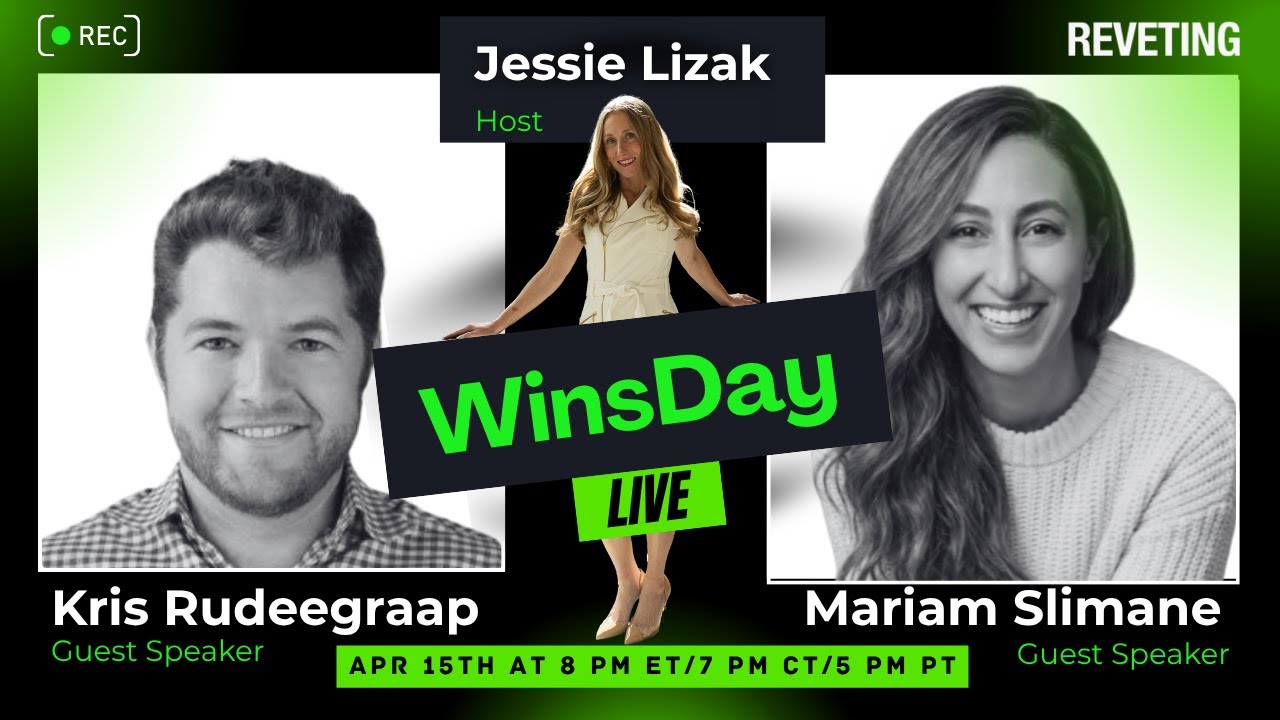
On this episode of WinsDay, Jessie Lizak sits down with Kris Rudeegraap, Co-CEO and Co-Founder of Sendoso, and Mariam Slimane, CMO and Growth Marketing Advisor at CX Fractional Advisors, to break down what actually drives pipeline and revenue as companies grow.
What the guests said
These are direct excerpts from the episode transcript. Punctuation, capitalization, filler repetitions, and obvious transcription artifacts were lightly cleaned for readability.
“Yeah. So I've been obsessed about direct mail and gifting for a decade. I was doing a lot of it manually in sales when I was in sales.”
Official episode notes
Getting to your first wins feels like momentum. Scaling past $50M exposes everything that is not built to last.
On this episode of WinsDay, Jessie Lizak sits down with Kris Rudeegraap, Co-CEO and Co-Founder of Sendoso, and Mariam Slimane, CMO and Growth Marketing Advisor at CX Fractional Advisors, to break down what actually drives pipeline and revenue as companies grow.
Kris shares his journey from sales rep to building Sendoso into a category leader, offering a firsthand look at how sales strategy evolves as companies scale.
The conversation explores how AI-powered direct mail and gifting help sales teams cut through noise, create meaningful engagement, and move deals forward in competitive markets.
Mariam brings deep experience in scaling B2B SaaS companies from $50M to $100M+ ARR. She focuses on building AI-driven demand generation systems, aligning product-led growth with enterprise GTM strategy, and creating marketing engines that produce a predictable pipeline. She also addresses a common issue in growth teams, over-reliance on CRM data, which often leads to missed demand signals and weaker pipeline performance.
Together, the discussion explores:
1. AI-Powered Direct Mail for Sales Teams
2. Over-Reliance on CRM Data Hurts Pipeline Growth
3. From Sales Rep to $100M CEO
4. Why Growth Stalls After $50M
This episode focuses on what changes between early traction and scalable growth, from pipeline strategy and demand generation to marketing systems and execution discipline.
For founders, revenue leaders, and B2B operators, the conversation offers a clear look at what it takes to move beyond founder-led momentum and build systems that support long-term growth.
How does one episode become a podcast and short-form video library?
The recording is only the starting point. A single WinsDay-style conversation can become a podcast episode, a full YouTube video, several short-form clips, written show notes, quote-led social posts, an email, and internal sales material. The strongest repurposing does not cut random moments simply because they are short. It identifies complete ideas that answer a buyer question, challenge an assumption, or offer a practical next step.
This approach gives a team more value from the time already spent recording. It also creates repetition without duplication: the same core expertise can appear as audio for podcast listeners, video for YouTube viewers, concise clips for social feeds, and written context for people searching on Google or asking an AI tool. Each format supports a different discovery habit while reinforcing the same positioning.
What should brands publish on LinkedIn and YouTube after the show?
LinkedIn and YouTube serve different roles in an expert-led content system. LinkedIn is useful for timely ideas, direct conversation, professional relationships, and distribution through the people attached to a brand. YouTube gives long-form video and searchable clips a longer shelf life. A practical publishing plan uses both: LinkedIn to create dialogue around the episode and YouTube to build a structured library of topics that buyers can discover later.
Instead of posting the same caption everywhere, teams should package the episode around the intent of each platform. A LinkedIn post can frame a strong point of view and invite informed discussion. A YouTube title and description should state the problem, audience, and outcome in plain language. Short clips need an immediate premise, readable captions, and enough context to stand alone. Consistent publishing matters, but clarity matters more.
How does episode content improve SEO and AI-search visibility?
Search visibility now includes traditional results and answers assembled by large language models. Both systems benefit from content that names the subject clearly, explains relationships between ideas, identifies the people and organizations involved, and provides complete answers in accessible language. Detailed episode pages can support that work when they include an accurate title, publication date, descriptive headings, original show notes, podcast metadata, internal links, and structured data.
The goal is not to repeat keywords unnaturally. It is to make the page genuinely useful for someone researching From First Deals to $50M+ and Beyond, building trust with the right audience, or a production partner who can help turn expertise into content. Specific examples, well-labeled sections, consistent entity information, and source links give search systems more context. They also help human readers decide whether the conversation and Reveting’s services are relevant to their needs.
What should a company evaluate before hiring a content production partner?
A production partner should understand both the recording and the business reason behind it. Before hiring, ask who owns show strategy, guest communication, technical production, editing, approvals, publishing, and performance reporting. Confirm which channels are included and how one long-form recording becomes usable assets. A low-friction workflow should reduce the client’s coordination burden rather than replacing one complicated process with another.
Teams should also look for editorial judgment. Good production is more than clean audio and attractive graphics. It requires knowing which questions will create useful answers, which moments deserve clips, how to preserve the speaker’s voice, and how to connect content to the audience’s real concerns. For companies building authority on LinkedIn and YouTube, that strategic layer is often the difference between an active content calendar and a content system that supports revenue.